
Posted by Kris Allo on Mar 6th 2026
The Ultimate Guide to Spiritual Art: Enhancing Your Space for Growth and Healing
Spiritual art is one of the oldest and most universal human practices, but it’s often misunderstood. Many people think it only means religious paintings or icons in houses of worship. But the true definition of spiritual art is wider and more personal than that.
In this guide, we’ll explore what spiritual art is, why it matters in your everyday spaces, the different types of sacred art that exist today, and how to choose spiritual wall art that genuinely resonates with your energy.
Table of Contents
- Spiritual Art Has Always Been About More Than What Meets the Eye
- Defining Spiritual Art
- Types of Spiritual Art You Might Encounter Today
- How to Choose Spiritual Art for Your Space
- Frequently Asked Questions About Spiritual Art
- Spiritual Art at Change Your Energy
- Modern Sacred Art Trends 2026
Spiritual Art Has Always Been About More Than What Meets the Eye
For thousands of years, humans have created art to connect with something larger than themselves. Cave paintings weren’t just records of daily life; they were bridges between the visible world and the invisible one. Mandalas were drawn in sand, knowing they would be swept away, because the act of creation was the point. Gothic cathedral windows flooded interiors with colored light to evoke a felt sense of the divine.
Spiritual art has always carried an intention beneath the image. In modern times, the medium and tools may have changed, but the same intention of our long-ago ancestors remains.
Sacred art is very much alive today—and it has always lived beyond the walls of any single tradition. Energy-infused paintings, like the ones we offer at Change Your Energy, are created to shift how a person feels, expand awareness, or anchor a specific kind of frequency.
Frequency is registered by the human nervous system before the mind can name it. This is why healing art for home and vibrational art for nervous system regulation has become a growing area of interest. Your body responds to your environment constantly, and the art you surround yourself with is part of that conversation.
Defining Spiritual Art
Spiritual art is art created with intention to evoke, support, or express inner experience.
It is not defined by subject matter alone. A completely abstract painting can be deeply spiritual. A painting of a Buddha is not automatically spiritual art.
What matters is the intention behind the work.
Was it created as a meditation? To hold a specific energy? To invite the viewer into a particular state of awareness? To honor a tradition, a deity, or a principle?
Spiritual art can include:
- Sacred geometry and mandalas that encode universal patterns
- Depictions of deities, saints, or spiritual figures from any tradition
- Nature imagery intended to evoke connection and grounding
- Abstract works created as visual prayers or energy transmissions
- Symbols and sigils that carry specific meaning or protective energy
- Art made as part of ritual or ceremony
The common thread is consciousness. Spiritual art is made with awareness. It’s made to do something beyond decorate.
Types of Spiritual Art You Might Encounter Today
Understanding the different expressions of sacred art can help you find what resonates with you.
Traditional Religious Art
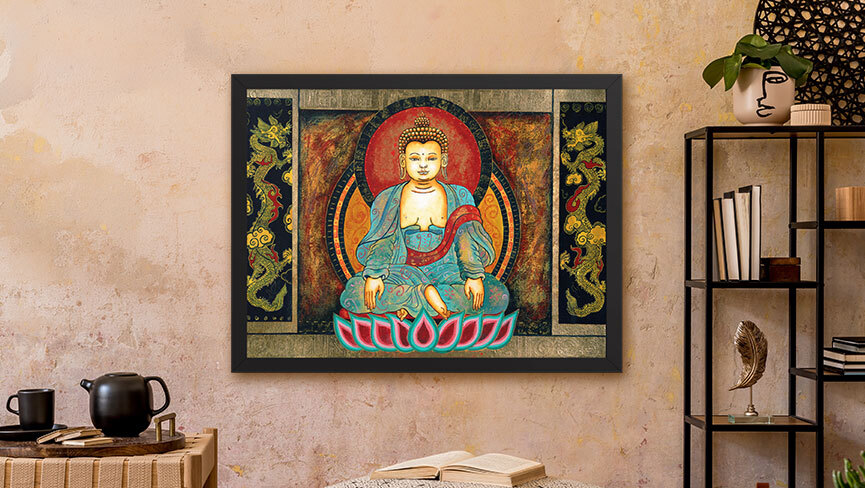
Traditional Religious Art encompasses some of the most enduring spiritual imagery in human history—Byzantine icons, Tibetan thangkas, illuminated manuscripts—works from religious cultures all over the world, created not to decorate but to transmit. They usually follow strict conventions passed down over centuries because the form itself is considered sacred, a focal point for prayer, teaching, and devotional presence.
Sacred Geometry Art
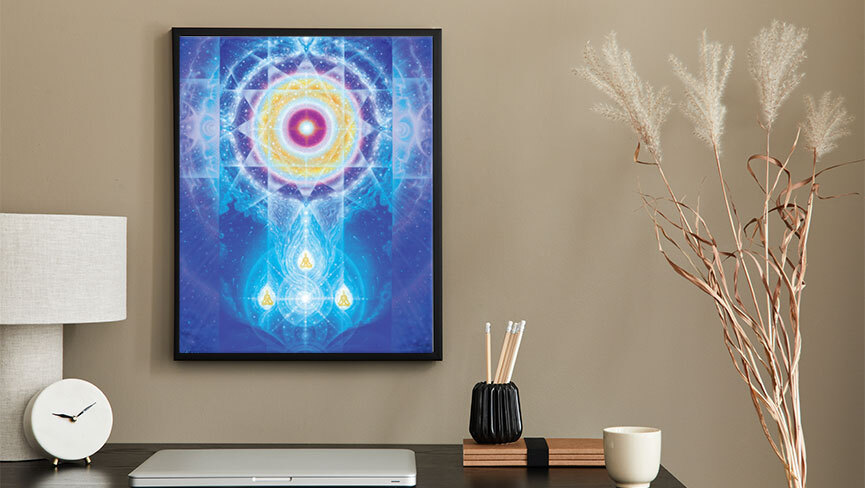
Sacred Geometry Art is built on the idea that certain mathematical patterns are woven into the fabric of reality itself. This includes things like the spiral of a nautilus shell, the branching of a tree, or the structure of a crystal. Artists translate these geometries into designs like the Flower of Life, the Sri Yantra, or 3D Platonic solids. The result is work that feels harmonious and transcendent in a way that is hard to articulate.
Nature-Based Spiritual Art
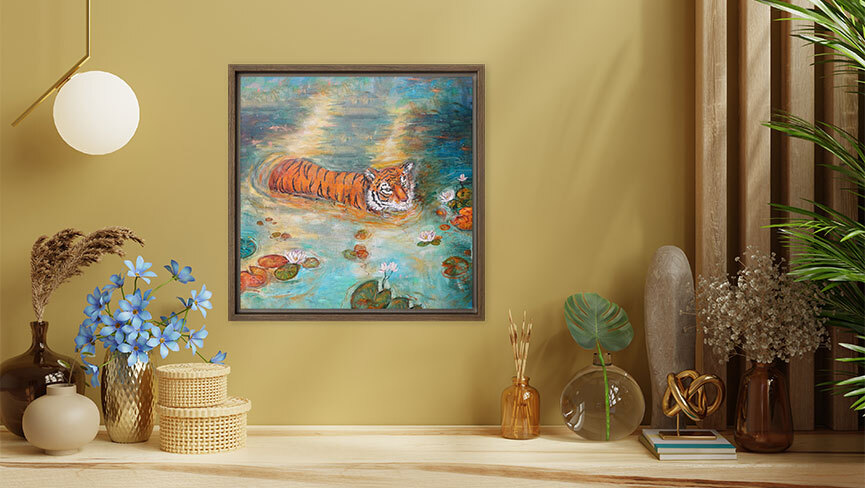
Nature-Based Spiritual Art is not simply a pretty landscape. It is an image created with the intention of evoking a felt sense of connection to nature. The nature around us and within us will always be essential, and steadier than the noise of daily life. Nature-based spiritual art can shift the atmosphere of a room entirely, bringing in groundedness, flow, or a quality of stillness that was missing.
Visionary and Transpersonal Art
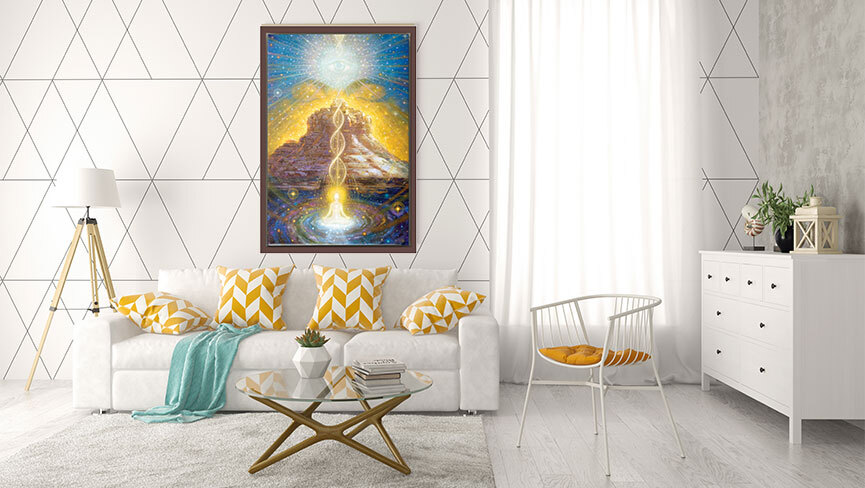
Visionary and Transpersonal Art attempts to paint what cannot be seen with ordinary eyes—inner landscapes, dream states, the architecture of consciousness itself. These works are often layered and symbolic.
If you find yourself drawn to a piece of visionary art, it’s often because something in it mirrors something in you that hasn’t yet found expression.
Energy Art
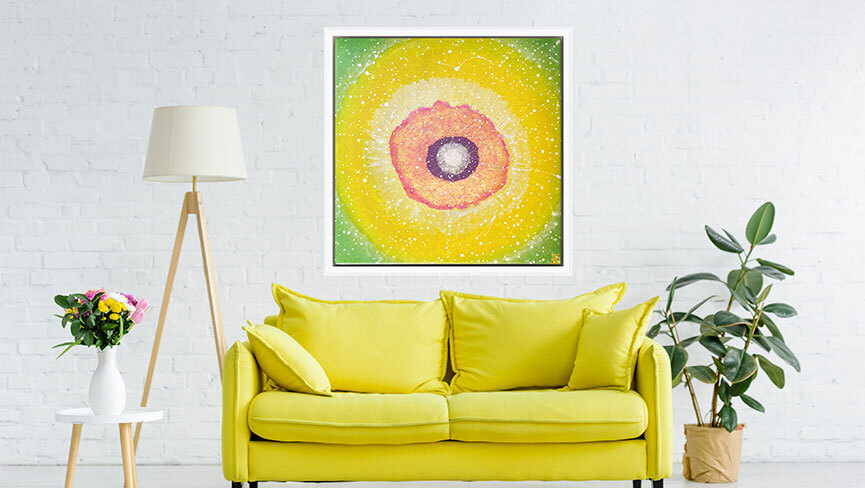
Energy Art is perhaps the most direct contemporary expression of the spiritual art tradition. Artists working this way create with specific energetic intention, many drawing from backgrounds in meditation or energy healing. The work is designed not just to be looked at, but to shift what is felt, like a tuning fork for your space. Collectors often describe it as having a powerful presence that’s difficult to put into words.
How to Choose Spiritual Art for Your Space
Selecting spiritual wall art is different from choosing decor. You are not filling wall space; you are curating the energetic atmosphere of your environment.
Start with your immediate response. Before you read the title or the artist statement, just look. What happens in your body? Expansion or contraction? A sense of coming home or a sense of unease? Trust that first response.
Then consider the energy you want to cultivate. A meditation room calls for something different from a creative studio or a bedroom. Ask what frequency would serve this particular space and the people who move through it.
When possible, learn something about the artist. Their background, their practice, what informs their work. Art carries the energy of its creator, and knowing the source helps you understand what you’re inviting in.
Think about scale and placement. A small piece can anchor an altar, while a large one can transform an entire room.
Finally, remember that what resonates today may not resonate in five years. Your spiritual path is alive, and your art can change with it.
Frequently Asked Questions About Spiritual Art
Is spiritual art only for religious people?
Not at all. Spiritual art speaks to the human need for meaning, beauty, and connection. You don’t need to follow any particular tradition to feel the difference a piece of intentional art makes in a space.
Can spiritual art really affect my mood or energy?
Many people report feeling calmer, more grounded, or more inspired in spaces where art has been chosen with intention. There is growing research into how visual environments affect the nervous system. What surrounds you shapes how you feel, often before you are even aware of it.
Where should I place spiritual wall art in my home?
Place it where you will see it during moments when you want to shift your state—an entryway, a meditation corner, a bedroom, a home office. You will know what feels right for each space.
Spiritual Art at Change Your Energy
If you are looking for spiritual art created with genuine intention, Change Your Energy is a curated marketplace devoted entirely to this kind of work. Every piece in our collections is what we call energy art—art made not just with skill, but with a conscious intent to support healing, spark creativity, and bring harmony into a space.
What sets energy art apart is the practice behind it. The artists represented at Change Your Energy do not simply paint. Many come from backgrounds in meditation, energy healing, or deep spiritual practice, and you can feel that foundation in the work itself. The pieces carry the frequency of their creation in a way that more decorative art simply does not.
Two artists whose work speaks to these themes are Rebecca Bond and Master Manwol:
Rebecca Bond
Rebecca Bond is an intuitive visionary artist who works with acrylics and alcohol inks to create vibrant, flowing expressions of the divine feminine and chakra art. Her art is inspired by nature and inner listening, and each piece seems to pulse with its own living energy.
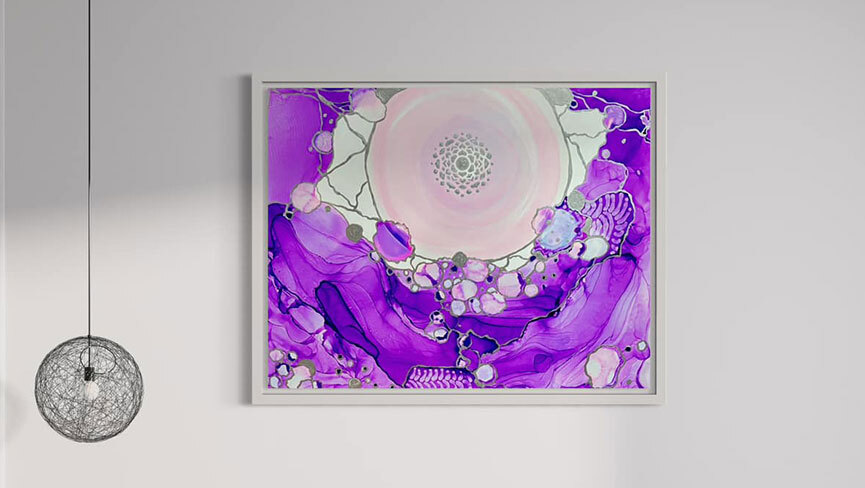
Her Crown Chakra painting is a beautiful example—an invitation into spiritual elevation and expanded awareness that works beautifully in a meditation space, a bedroom, or anywhere you want to be reminded of your own light. View Crown Chakra here.
Master Manwol
As the founder of the Sun Tao practice in Korea, Master Manwol (Jeongeun Son) has spent decades guiding people to live in alignment with their true nature.
When she makes art, Manwol explains, “I try to put a loving heart, a bright and pure human nature, and a sincere prayer to the world.”
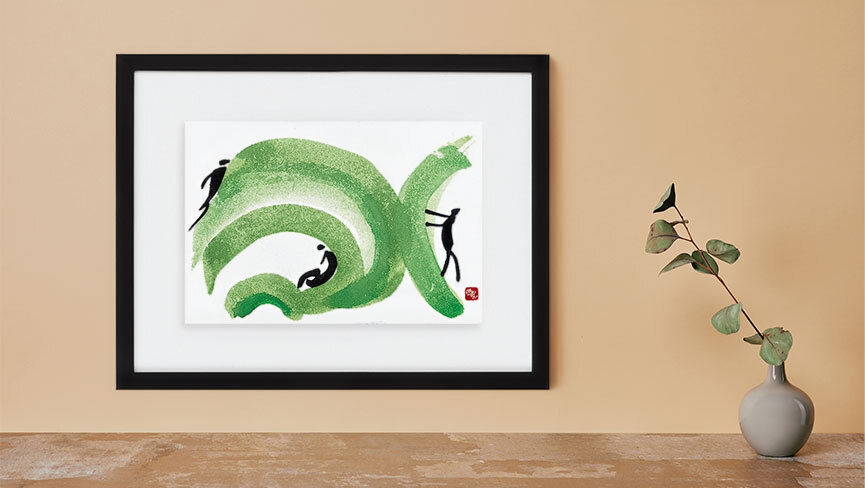
Her creative process is deeply meditative, and each line and form emerges from that presence. Explore Master Manwol’s gallery here.
Modern Sacred Art Trends 2026
The modern sacred art trends of 2026 reflect a collective hunger for grounding and meaning. More people are intentionally curating their spaces for how they want to feel, not just how they want things to look.
Spiritual art is an invitation to turn inward and reconnect to the forces of the divine. Whether it’s ancient symbols or contemporary visions, detailed iconography or pure abstraction, there is spiritual art that speaks your particular language.
To explore energy art created with intention, visit Change Your Energy’s Art Gallery here.