
Posted by Kris Allo on Jun 29th 2026
The Unexpected Red Theory
In 2024, interior designer Taylor Migliazzo Simon made a TikTok video introducing a new concept to the design world. It offered an antidote to years of muted, neutral-heavy, and beige decor that had been so common at the time. Her idea went viral and quickly spread across social media. This was the birth of the Unexpected Red Theory.
The concept is simple: place one red accent somewhere in a room where it seems like it doesn't quite belong, and watch the whole space come alive. Not lots of red, just a touch in the right place, and the whole room changes.
When the idea first spread, people recognized its impact right away. They had seen it in rooms they admired, without consciously noticing it. Some had even done it themselves without knowing why. They were just following their intuition, and it worked.
If you've ever walked into a beautifully put-together space and felt something—a quiet vitality, a sense that everything is just right—you may have been experiencing this principle at work without having a name for it. The theory offers that name, and it opens up a genuinely interesting conversation about how the things we choose for our spaces do more than decorate them.
The Unexpected Red Theory spread because it tapped into something people felt to be true. It doesn't tell you exactly where to place the red or how much to use, but it names a phenomenon many have noticed: that a single point of contrast can make a room feel more complete.
What Red Does in a Space
Color psychology gives us useful language for what happens when red enters a neutral or muted room. Saturated colors—and red especially—are associated with increased alertness, vitality, and attention. Red is one of the first colors the human eye notices, and it tends to anchor itself in the visual field, drawing your gaze back even after you've looked away.
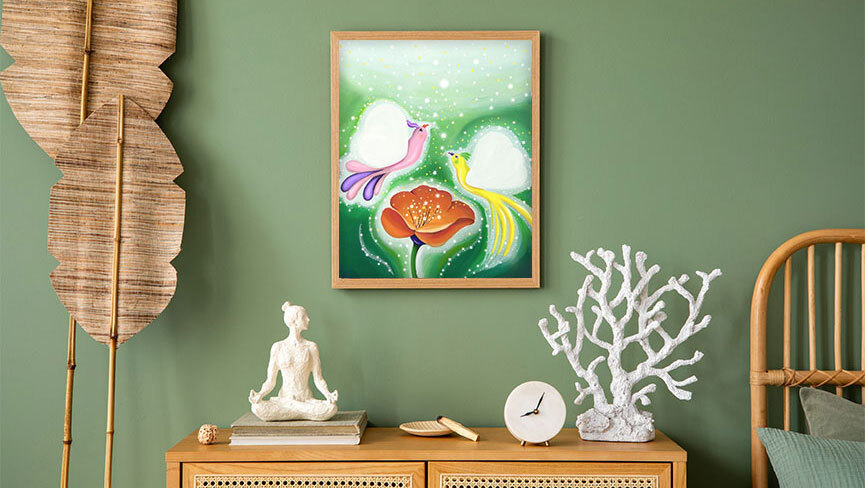
There's an evolutionary reason for this. Our long-ago ancestors lived entirely in the natural world, where a pop of red against a green backdrop usually signaled something important to survival—like fire, blood, or a potentially edible berry on a bush. Over time, our brains became wired to treat that color as a priority. We still carry that response in our nervous system, even in a modern living room.
So a small red element in an otherwise calm or neutral space creates immediate impact. It's like a deliberate interruption that gives the eye somewhere interesting to land. In doing so, it gives the whole room a sense of intention. And the other elements in the space feel more purposeful simply because there's one point that holds its ground.
This is the heart of the theory. Red works not by dominating a room, but by completing it. A space that feels slightly flat or unresolved might just need one element that refuses to blend in.
The Power of the Unexpected
The most important word in Unexpected Red Theory isn't red; it's unexpected. To do it right, you have to place the red where it creates a little surprise.
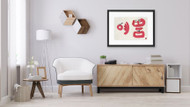
Interiors that embody this principle often feature something small: a throw pillow on a white sofa, a single framed piece on a gallery wall, a lamp base or a painted chair tucked into an otherwise neutral corner. The red element is rarely the largest thing in the room, but it might be the most remembered.
Intention Is the Real Principle
From an energy perspective, what Unexpected Red Theory describes isn't just a color trick. It's a principle about what happens when you introduce something chosen with full awareness into a space. The red isn't random. It only looks spontaneous. The placement is deliberate.
This is why the theory resonates so strongly with an intentional approach to living. When we choose the objects in our homes with care—not just for how they look, but for what they carry, what they represent, and what kind of energy they hold—we're doing exactly what Unexpected Red Theory describes at its best. We're placing something conscious into a space and trusting that the space will respond.
Art made with intention works in precisely this way. A single piece on a wall can shift the energy of an entire room, not because of its size or its color alone, but because of the awareness embedded in it by the artist, and the awareness brought to its placement.
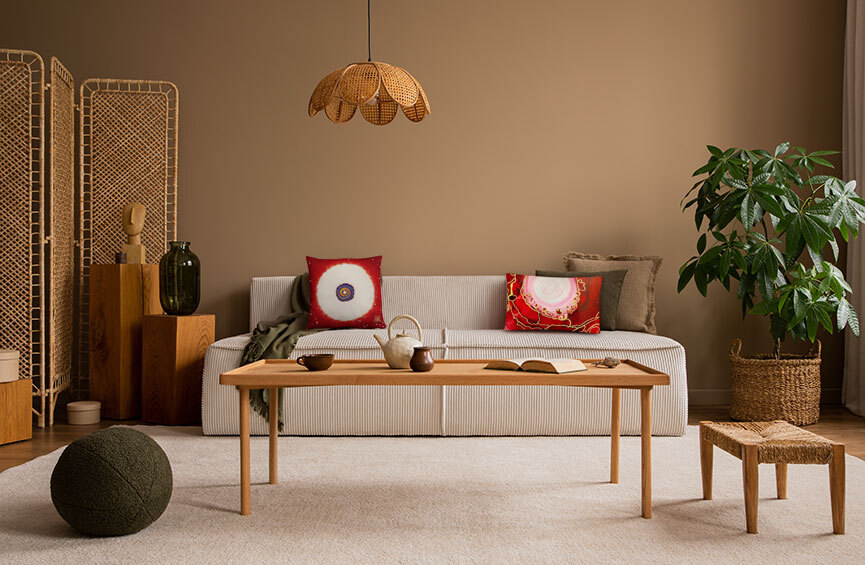
For example, Rebecca Bond’s Root Chakra throw pillow carries the energy of her grounding practice—the original painting was visualized while standing barefoot in the grass, connected to earth and sky at once. That’s root chakra energy: safety, belonging, presence. Set against a neutral sofa or a calm corner, it becomes exactly the kind of vivid, rooted presence the theory describes.
Jisu Han's Flower of the Universe #15 throw pillow carries a different energy. Jisu painted this series to share what she experiences in deep meditation—the feeling of infinite universal energy blooming outward. As a pillow, it carries that expansive, luminous quality into the room. Placed where you want the energy to open up, it can make the space seem to breathe a little wider.
When Unexpected Red Isn't Right
It's worth saying that red isn't the right energy for every space. In rooms designed for deep rest, softness, or recovery, a strongly activating accent can work against the purpose of the room. Red excels in living spaces, entryways, and areas meant for gathering, conversation, and vitality. In spaces meant for stillness, it might be best to let other colors carry the space.
The goal is always resonance—matching the energy of a space to its purpose, and making choices that support how you want to feel in each room. Sometimes that means a touch of red that wakes everything up. Sometimes it means something softer.
Find Your Unexpected Red
If this has you thinking about your own spaces, we invite you to explore our red energy art gallery—from wall prints to wall canvases, the collection spans a range of styles, subjects, and intentions, each created by artists working from intentional practice.
Or explore our energy art throw pillows for a smaller, softer way to bring that unexpected spark home.