
Posted by Kris Allo on Oct 2nd 2026
The Tao of Dying Well: Ilchi Lee's New Book on Living Fully to the End
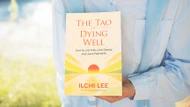
Change Your Energy founder Ilchi Lee's newest book, The Tao of Dying Well: How to Live Fully, Love Deeply, and Leave Peacefully, comes out on October 20 and is available for pre-order now.
As an energy and meditation master, teacher, and humanitarian, Ilchi Lee has spent decades helping people all over the world live longer, healthier lives. In his new book, he says:
Living longer, by itself, is not enough.
There's a difference, he explains, between a long lifespan and a long life. A lifespan is counted in years, but a long life is measured by how fully those years are lived.
Two Endings of Life
Ilchi Lee watched his parents go through two very different experiences at the end of their lives.
His mother passed away at 82. She was spirited and strong-willed, more diligent than anyone he knew. But as she approached her 80s, a fall left her bedridden. She struggled with losing her independence, and never seemed to make peace with her final years. When she died, it was like she was finally released from a long ordeal.
His father's ending was quite different. He passed away at 95. His body had grown weaker with age, but he wasn't seriously ill, and he went peacefully. Ilchi Lee spent the two weeks before his death by his side, watching his life gradually draw to a close.
His father was ready. He said he had lived without regret, and he was content. Then he simply let go.
These two endings taught Ilchi Lee that a good death doesn't happen by chance. It grows from a life well lived.
Death as Completion
Drawing on the Korean Sundo tradition, an ancient practice of mind-body-spirit cultivation, he describes death not as an ending, but as a completion, a transformation within the great cycle of life. In Korean, this completion is called Chunhwa.
Chunhwa isn't only about the final moment. It's the completion of the whole story, shaped by every hour of how you've lived. It isn't reserved for extraordinary people, either. It's a possibility woven into every person's life.
He compares it to graduation from school. We know ahead of time that one day we'll graduate, and that true graduation is more than just leaving. It includes reflection, a summing up of everything learned. A life without that kind of completion is like walking out of the schoolyard without a diploma. No matter how many years you've lived, it feels unfinished.
It all begins with a question: How shall I live? Follow it all the way to its end, he says, and you find yourself standing before death, where "no mirror reflects life more clearly."
A Glimpse Inside
The Tao of Dying Well explores how to live fully until the very end, no matter your age or how many years, months, or days remain.
It asks what it means to live as your true self rather than just wandering through the life that circumstances have handed you.
And it looks at the final chapter as something you can approach with intention. That means looking clearly at the life that remains, and preparing to meet its last stage with as much peace, dignity, and awareness as possible.
You'll find chapters like:
- "The Author of Life Can Choose How to Meet Death"
- "Create Your Own Life Completion Ceremony"
- "The Body Departs but Spirit and Values Remain"
It also includes "A Companion's Guide: How to Be Present for the Final Moments of a Loved One," for anyone caring for someone as they approach the end.
The book is for people in the second half of life, when deeper questions about your remaining time tend to come up. It's also for anyone walking a parent or loved one toward the end. And it's for those who feel they still have all the time left in the world.
Ilchi Lee says no one is too early, and no one is too late, to begin thinking about how they want to live.
You can't choose how many years you're given. But you can choose what you do with those years, who you become through them, and how you want to walk through your graduation when the time comes.
Pre-order your copy of The Tao of Dying Well here.